seo tehniskais audits

Using Infographics to Boost Your Blog’s SEO

In a world of sustainable living, where every small step towards a green lifestyle counts, infographics are powerful data visualization tools that make complex information easy to understand and share. They not only increase reader engagement but also significantly improve search engine optimization (SEO) by making content more relatable and shareable. In this article, we’ll walk you through the process of creating effective, SEO-friendly infographics, distributing them, and measuring their impact to ensure they boost your website’s visibility.

Conceptualizing your infographic

The first step in creating an infographic is to conceptualize a topic that resonates with your audience. In our case, this could include topics such as the life cycle of recycled materials or the carbon footprint of different transport methods. When choosing a theme, consider what information is useful and relevant to your readers and how it fits with the overall content of your website.

The starting point for effective infographics is solid data, so do your research carefully and use reliable sources to gather information. Remember, the goal is to simplify complex data in a visually appealing way that encourages sharing.
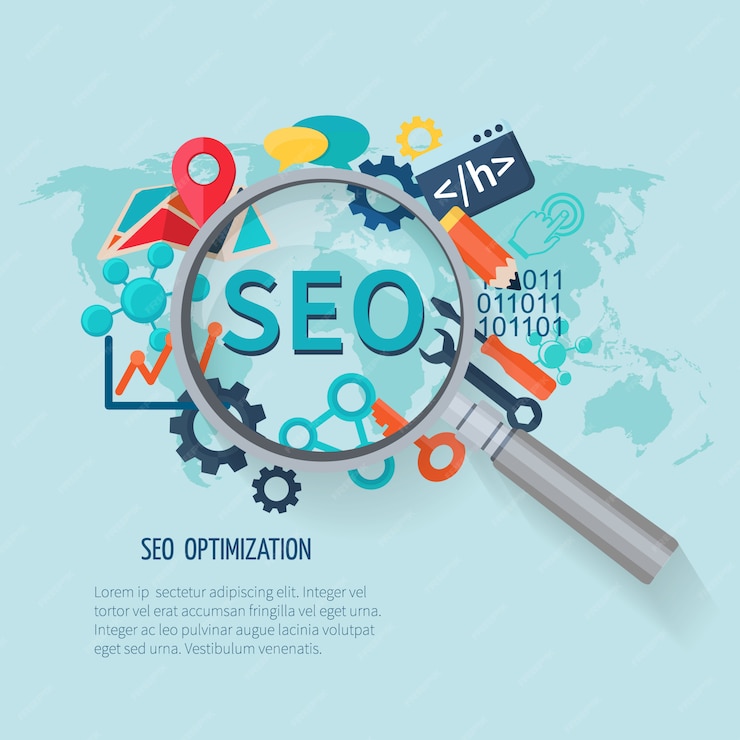
seo optimization

Designing SEO-friendly infographics

Once you have the data, the next step is to create the infographic. Make sure your design is not only visually appealing but also optimized for search engines. Use clear, legible fonts and add alt text to all images to improve accessibility and SEO.

Include keywords naturally in the title and description of the infographic to improve its visibility. Don’t forget to make your infographic scalable and mobile-friendly. Adding SEO optimization strategies right from the start will help increase its reach and effectiveness.

Distributing your infographics

After creating the infographic, the next important step is dissemination. Share your infographic on all relevant social media platforms to increase its visibility.

Platforms such as Pinterest and LinkedIn are particularly effective for sharing visual content. In addition, consider embedding the infographic in blog posts and website pages to enhance related content.

Email messages are also a great distribution channel as they drive traffic back to your website. Remember that the wider the distribution, the greater the potential for backlinks, which are very important for SEO optimization.

Measuring impact with analytics

To truly understand the value of your infographics, you need to use analytics to measure their impact. To measure the success of each infographic, keep track of how many views, shares, and backlinks each infographic receives. Tools like Google Analytics can help you see how your infographics are driving website traffic and engagement.

Pay attention to metrics like bounce rate and time spent on the page to see if your visuals are keeping visitors’ attention. Adapting strategies based on these insights can significantly improve the effectiveness of future infographics.

guestposts for seo

Trends in eco-friendly visual content

Keeping up with trends is essential to maintain the interest of readers, especially on a dynamic topic such as sustainable living. Interactive infographics, which allow users to enter preferences and receive personalized data, are becoming increasingly popular.

They engage users more deeply and encourage them to interact with the content for longer, thus indirectly boosting SEO by increasing dwell time. Interactive infographics on the impact of personal carbon footprints or different recycling methods can captivate and effectively educate readers.

Infographics as a strategic tool 

Infographics are not just visually appealing, they are a strategic tool that can significantly increase a blog’s reach and impact. By simplifying complex topics into engaging, shareable formats, infographics help spread important information about sustainable living while improving your site’s SEO optimization.

As you continue to integrate these visuals into your content strategy, keep an eye on trends and analysis to maximize their effectiveness. With the right approach, infographics can change the way your audience interacts with your content and raise public awareness about sustainability.

watermelon cutter

Watermelon Cutter – Precision for Large Fruit

In professional kitchens and supermarkets, precision in food preparation is paramount for aesthetics, maximum efficiency, and waste reduction. Often, cutting large fruits such as watermelons poses the most significant challenges. Therefore, in this article, we will describe the advantages of a watermelon slicer, focusing on its precision.

cutter for watermelon

Traditional cutting methods and their disadvantages

Usually, a large knife is used to cut the thick rind and flesh of the watermelon. This traditional method usually involves placing the watermelon on a stable surface and forcibly cutting it into segments.

Although this is the standard method, it causes several problems: the size and rigidity of large knives can make it difficult to make precise cuts, resulting in uneven slices. The risk of accidents can also increase.

Solution – specialized watermelon cutter

An innovative tool has been developed to make cutting watermelons and other large fruits more precise and efficient -the specialized watermelon cutter. This cutter has been designed to address the specific needs of cutting large, bulky fruit and offers a more accurate alternative to a large knife.

Unlike traditional knives, the watermelon cutter usually has a design that encircles the fruit, allowing the entire watermelon or melon to be cut evenly in one movement. The uniformity of the slices and the overall accuracy of the work have yet to be improved, and the effort required has been reduced.

cut with ease

Advantages of using a watermelon cutter

In addition, using a watermelon cutter can contribute to a safer working environment. The controlled cutting mechanism reduces the need for excessive force, thus reducing the risk of slips or injuries, which is particularly important in fast-paced commercial kitchens.

While around 90% of fruit cutting in professional environments still use large knives, watermelon slicers offer greater precision and safety. These tools are efficient and meet the increasing demands of culinary professionals for accuracy and speed in food preparation.

Innovation in culinary accessories

This innovation does not promise to revolutionize kitchen work overnight, but it offers a calm and rational alternative to the traditional method. As culinary tools evolve, introducing such specialized equipment could be a step towards more efficient, safer, and precise fruit preparation.

Check out this article although:

seo audit

Content Optimisation Strategies – SEO-Friendly Content

Creating SEO-friendly content in a changing digital landscape is an opportunity and a necessity for e-commerce sites that want to stand out. Understanding these strategies is crucial for the audience of a platform dedicated to the art and science of blogging. 

We will explore the importance of keyword research, engaging content, and fine-tuning page elements. In addition, we will focus on optimization to improve visibility and engagement through Google’s ever-changing features.

Such as featured snippets and rich snippets. This article will help you improve your online presence and drive organic traffic effectively.

keyword research

Keyword research – foundation of SEO

Keyword research is a critical first step in aligning e-commerce content with the demands and needs of the target audience. It involves identifying the terms and phrases that potential customers use in their online searches, allowing you to tailor your content to their interests and increase your website’s visibility.

Understanding the importance of keyword research

Keyword research is at the heart of any successful SEO strategy. This involves identifying potential customers’ terms and phrases when searching for products or services online.

For e-commerce sites, this means digging into what your target audience is looking for. What language do they use, and what content do they prefer?

Strategies for effective keyword research

Start using tools like Google Keyword Planner, SEMrush, or Ahrefs to discover high-value keywords relevant to your niche. Focus on long-tail keywords with a higher conversion rate due to their specificity. 

Despite their lower search volume. Integrating these keywords naturally into product descriptions, advertorials, and meta tags can significantly improve your website’s SEO performance.

Content creation – engaging your audience

Creating content that engages the audience is selling the product. As well as telling a story that resonates with the audience’s needs and wants.

You can connect with your audience by creating high-quality product descriptions, using customer testimonials, and publishing informative blog posts. This will go beyond the transaction, fostering loyalty and encouraging repeat visits.

Crafting high-quality product descriptions

The quality of product descriptions can make or break a customer’s purchasing decision. A convincing description not only informs but also entices.

Use persuasive language and highlight unique features. And most importantly, include researched keywords to make your products easy to find.

Leveraging customer reviews and informative blog posts

Customer feedback builds trust and adds to the richness of your website content. Reviews offer real insight into your products.

Meanwhile, informative blog posts that answer frequently asked questions or discuss related topics. This can attract a wider audience, driving additional traffic to your site.

seo technical audit

On-page optimization – fine-tuning your content

On-page optimization is the art of fine-tuning elements of web pages to improve their position in search engines and enhance the user experience. It involves optimizing meta tags, headings, and images with targeted keywords.

As well as providing a website structure that facilitates navigation and ensures fast load times. This not only makes content more accessible but also more enjoyable for visitors.

The role of on-page SEO

On-page SEO involves optimizing individual web pages to rank higher in search engines. This includes improving meta titles, descriptions, and title tags.

It is also essential to include targeted keywords. Ensuring that the structure of your website is intuitive and that URLs are suitable for SEO is also critical to this process.

For a comprehensive overview of conducting an SEO audit for your eCommerce site, check out SEO audit, which provides step-by-step guidance tailored to eCommerce platforms.

Optimizing for Google’s SERP features

Optimization for Google SERP features such as Featured Snippets and Rich Snippets. It can significantly improve the visibility and click-through rate of your content. 

You are structuring your content to respond directly to common queries and using schema markup to give search engines clear information about your content. Increase the likelihood of appearing in these preferred positions on the results pages.

Capturing featured snippets and rich snippets

Featured and rich snippets can significantly increase your visibility on search engine results pages (SERPs). To optimize them, structure your content to answer potential questions directly.

Using schema markup can also help search engines better understand your content. Thus increasing the chances of your site being listed.

Voice search and visual search optimization

With the rise of smart speakers and visual search technology, optimising content for voice and visual search has become a must. This includes using natural language in content and tagging high-quality images with descriptive, keyword-rich file names and alt attributes.

Empowering your E-commerce strategy with SEO

For Blogmaster.lv readers, navigating the complexities of creating SEO-friendly content is essential to thrive in a competitive e-commerce environment. You are implementing the strategies outlined in this article, from thorough keyword research to on-page optimization.

You can improve your online presence, engage potential customers more effectively, and increase sales. Remember that SEO is an ongoing process, and keeping up to date with the latest trends and algorithms is essential to maintain success.

technical seo audit

Introduction to Technical SEO to Understand the Basics

In an era where the digital marketplace continues to expand exponentially, understanding the technical nuances of search engine optimization (SEO) is essential for businesses looking to grow online. On e-commerce platforms, where competition is fierce, and the battle for visibility is relentless, technical SEO can be a game changer.

This article is particularly relevant to readers of promocase.lv, a hub for marketing, sales, and business improvement enthusiasts. This article delves into the core elements of technical SEO vital for eCommerce success, highlighting how these strategies can improve search engine rankings and drive organic traffic to your website.

Site structure – building a solid foundation

In the vast and complex world of e-commerce, a successful online presence is based on a carefully organized website structure. At the heart of technical SEO audit optimization, this element is crucial as it makes it easier for search engines to crawl and index your site efficiently.

By understanding the nuances of site architecture, businesses can significantly improve their online visibility, ensuring that products and services are visible and easily accessible to potential customers. Let’s explore how a solid site structure can serve as the backbone of your e-commerce platform, creating the foundation for sustainable digital growth and visibility.

The blueprint of your online presence

A well-organized website structure is about more than aesthetics. It’s also about creating a seamless user experience that search engines can easily understand and index.

For e-commerce platforms, this means structuring the site so that products are easy to find. Categories are logically organized, and information is accessible with a few clicks.

Key strategies for optimization

Key optimization strategies are essential to transform the structure of a website into a search engine success indicator. These tactics streamline navigation for users and improve your site’s visibility and browsability. They are making it more search engine friendly. Let’s look at these critical strategies that can put your eCommerce site at the forefront of the digital marketplace:

  • Simplify navigation: Make sure your site navigation is intuitive, with a clear hierarchy that guides visitors effortlessly.
  • URL structure: Adopt a consistent URL structure that reflects the site hierarchy, making it easier for search engines to crawl and index pages.
  • Internal links: Use internal links intelligently to distribute page authority throughout the site and help search engines discover new pages.
seo audit

Ensuring search engines can read your site

Unlocking the full potential of your website starts with making it visible, which is essential for search engines to access and understand your content. This step is necessary to make your website visible on the broader web.

And you are creating the conditions for effective indexing and better visibility in search results. Let’s look at how improving crawlability can pave the way for your website’s content to be seamlessly discovered and appreciated by search engines and users alike.

Making your website accessible

Crawlability refers to the ability of a search engine to access and crawl the content of your website. If search engines cannot find and understand your content, your pages will not appear in search results, so your SEO efforts will be in vain.

Enhancements for better crawlability

To improve the visibility of your website in the digital environment, it is essential to make improvements that enable better browsing. These strategic adjustments ensure that search engines can effortlessly access and navigate your website.

They also help you to optimize your online presence for higher search rankings. Key improvements can improve your site’s navigability, making it easier to find and more attractive to search engines:

  • Robots.txt: Use this file wisely to communicate to search engines which parts of your site they can and cannot crawl.
  • Sitemap: To help search engines find and index your pages more effectively, it is essential to submit a sitemap.
technical seo

Indexing – the gateway to visibility

Indexing is a critical tool that takes your website content from being easily accessible to visible in search engine results. This process is essential for search engines to understand, categorize, and save your web pages.

And make them available to users during online searches. Let’s delve into the nuances of indexing and discover how it can significantly improve your website’s visibility and, therefore, your digital impact in the competitive online marketplace.

From crawling to indexing

Once the site is crawlable, the next step is to ensure it is indexed. Indexing is how search engines organize and store information about your websites, making them accessible to users.

Improving your site’s indexability

Maximizing your website’s indexability is a strategic measure that requires a thorough understanding of how search engines view and evaluate your content. By focusing on key improvements, you can increase the likelihood that your pages will be indexed and rank favorably in search results.

Key tactics and tweaks that can improve your site’s indexability. And ensuring it gets the attention and visibility it deserves from search engines:

  • Meta tags: Use meta tags to tell search engines which pages to index and which to ignore.
  • “Canonical” tags: Address duplicate content by specifying a page’s “canonical” version, thereby telling search engines to prioritize it in search results.

Mobile-friendliness – catering to the mobile consumer

In today’s digital age, most internet users access the web via mobile devices. Making mobile devices easy for the mobile consumer is not just an option but a must. 

This crucial aspect of technical SEO audit optimization ensures that your website provides an optimal experience across all devices, directly impacting your search rankings and user satisfaction. Mobile-friendliness is essential and can be a critical driver for improving online visibility and engagement.

Embracing the mobile-first world

In today’s mobile-centric environment, the mobile-friendliness of an e-commerce site is a must. Mobile-friendliness not only affects the usability of your website, but also its position in search engines.

Strategies for mobile optimization

In today’s smartphone-centric world, adopting mobile optimization strategies is crucial to ensure that your website meets and even exceeds the expectations of mobile users. These strategies are designed to improve the overall user experience, from improving page load times to ensuring responsive design:

  • Responsive design: insert responsive design that adapts the content layout to the user’s screen size.
  • Page speed: Optimize page load times to improve user experience and support SEO efforts.

Charting your path to success

For our dynamic community, learning the technical basics of SEO is not just about improving search engine rankings. But also build a user-centric experience that resonates with your audience.

By focusing on the basics of site structure, browsing, indexing, and mobile-friendliness, you’re paving the way for your ecommerce platform’s success in the digital sphere. Remember, the road to SEO excellence is continuous, and the key is to stay informed.

For those who want to dive deeper, consider a technical SEO audit to uncover optimization opportunities. Ensure your eCommerce site survives and thrives in today’s competitive online marketplace.

Follow the links below to find out more about growing your business through marketing:

sales channels

Innovative Promotional Tactics for Consumer Loans

Exciting marketing insights from the world of finance, a center of experience and cutting-edge marketing, sales, and business improvement strategies. In today’s fast-changing financial environment, consumer credit has become an important segment that requires innovative promotional tactics.

This article explores creative and unconventional promotional strategies that have successfully raised brand awareness for consumer credit. We look at various dynamic approaches, from public events to influencer partnerships.

Our goal? To provide valuable insights and inspiration, whether you want to increase your online consumer credit offering or improve your sales channels.

loans

Community events – engaging locally, impacting globally

Community action is a powerful tool in the consumer credit promotion arsenal. They create a platform for direct engagement with potential customers, offering a unique combination of personal contact and brand awareness.

Impact in figures

Consider a financial institution that organizes a “Financial Fitness Bootcamps” series in different neighborhoods. These events, which focus on personal finance management and loan literacy, serve educational purposes and act as a direct marketing platform.

Attendees often leave with a better understanding of the institution’s loan offers, resulting in increased inquiries and applications. Such events can lead to an increase in loan applications, with some institutions reporting an increase of up to 30% in the months following the event.

Referral programs – turning clients into advocates

Referral programs turn satisfied customers into brand ambassadors. Financial institutions can tap into a network of potential customers by motivating existing customers to refer their friends and family.

Case studies

A notable example is a bank that introduced a multi-level recommendation program. For each successful referral, customers received a small cash bonus.

If the referral resulted in a loan, they received an additional bonus or a reduction in the loan’s interest rate. Using this approach, the Bank’s consumer loan portfolio grew by around 40% over the year, demonstrating the power of an incentive-based word-of-mouth recommendation.

Influencer partnerships – bridging finance and fame

Influencers, with their large followings and persuasive influence, can be instrumental in promoting consumer credit. Financial institutions that work with influencers in targeted campaigns have seen significant engagement rates.

Influencer influence

A compelling example is a campaign in which a bank partnered with a famous influencer in financial advice. This influencer created content on the ease and benefits of bank loans, reaching millions of followers. This led to a significant increase in loan inquiries and applications – reportedly up by 50% during the quarter – demonstrating the vast potential of influencer marketing in the financial sector.

online campaigns loans

Interactive online campaigns – digital dynamics

In the digital age, interactive online campaigns offer various creative possibilities. These campaigns can significantly increase consumer engagement and credit applications, from social media challenges to webinars.

Digital success

One effective campaign involved a bank introducing an interactive online loan calculator with a twist. It was designed as a game where users could virtually ‘build’ their dream project – a home renovation or a business start-up – and then find out about loan options tailored to their project. This engaging approach led to a 35% increase in website traffic and a 20% increase in online loan applications, highlighting the effectiveness of interactive digital tools in engaging consumers.

What’s hot in the loan market?

Keeping up to date with current trends is very important. Geo-improvement and green borrowing options have become increasingly popular in borrowing processes. They meet the values of today’s consumers and open up new promotional opportunities.

A trend in action

For example, a bank launched a “green loans” initiative offering favorable terms for loans used for environmentally sustainable projects. This initiative appealed to the market’s environmentally-minded segment and attracted positive media attention, resulting in a 30% increase in loan demand among the target audience.

Tailoring strategies for Promocase.lv readers

As we have already explored, innovative advertising tactics can significantly impact the consumer credit industry. For the Promocase.lv community, these insights offer a blueprint for creatively and effectively improving your financial services marketing. 

The potential to elevate your brand is vast, whether engaging in community events, profitable referral programs, strategic partnerships with influencers, interactive online campaigns, or leveraging the latest market trends. Remember, the key is understanding your audience and adapting your strategies to resonate with them. Use these tactics and watch your consumer credit offering flourish in a competitive mark

marketing loan

Personalization is a Game-Changer in Loan Marketing

Personalization has become a crucial differentiator in today’s highly competitive financial market, especially in loan marketing. For readers of promocase.lv, a blog dedicated to the nuances of marketing, sales, and business improvement, understanding the power of personalization in consumer credit marketing is invaluable.

This article looks at how data analysis, personalized email marketing campaigns, and the creation of detailed customer profiles can revolutionize the way financial institutions approach loan marketing. By using these strategies, companies can improve their sales channels and offer more relevant and attractive financial solutions to their customers.

The role of data analytics in targeted advertising

In the era of big data, financial institutions are increasingly using data analytics to improve their advertising strategies. By analyzing customer data, lenders can identify potential borrowers more effectively and tailor their marketing efforts to individual needs. This approach ensures that marketing resources are used efficiently, targeting those most likely to respond positively to a personal loan offer.

For example, data analysis allows lenders to segment their audience based on various criteria such as income level, spending habits, and credit history. They can thus create tailored advertising campaigns that respond to each segment. This level of precision improves the effectiveness of loan marketing campaigns and the overall customer experience.

marketing campaigns

Personalized email marketing campaigns

Email marketing remains a powerful tool in the arsenal of loan marketers. However, the key to success is personalization. Personalized email campaigns are designed to meet each recipient’s specific needs and interests, making them more relevant and engaging. By integrating data analysis, lenders can tailor email content to reflect a person’s financial behavior and preferences.

This may include offering a personal loan to someone recently seeking financial solutions. Or recommending a specific loan product that fits their spending habits. Personalized emails can consist of tailored product offers and personalized financial advice, making them a valuable resource for potential borrowers.

Creating customer profiles for tailored financial solutions

Creating detailed customer profiles is essential for personalized financial solutions. These profiles contain various data, including demographic information, financial history, and behavioral patterns. By analyzing this data, lenders can understand each customer’s unique financial situation and needs.

This understanding allows them to develop loan offers that are attractive to the customer, feasible, and responsible. For example, a lender may offer a better interest rate to a customer with a good credit history or recommend a loan amount that matches the borrower’s ability to repay the loan. Such an approach increases customer satisfaction and reduces the risk of default.

loan marketing

Embracing emerging trends in loan marketing

To stay relevant and competitive, financial institutions must keep up to date with the latest trends in loan marketing. One emerging trend is using artificial intelligence and automated learning to improve personalization strategies further. These technologies allow lenders to analyze vast amounts of data more efficiently, leading to more accurate customer profiling and targeted marketing campaigns.

Another trend is the increasing use of mobile platforms in loan marketing. The widespread adoption of smartphones, mobile apps, and SMS marketing have become powerful tools to reach potential borrowers. These platforms offer additional personalization options, such as location-based offers and instant processing of loan applications.

Personalization as the future of loan marketing

For savvy promocase.lv readers, personalization in loan marketing is a trend and a necessity. Financial institutions can offer more relevant and attractive loan products through data analysis, personalized email marketing, and detailed customer profiling. This approach improves the customer experience and contributes to business growth and profitability.

As the financial market continues to evolve, those who excel in personalization will undoubtedly be the leaders in consumer lending. Learn more about the nuances of sales channels and dive into the specifics of personal lending to stay ahead in the competitive world of loan marketing.

Check out this article too: